
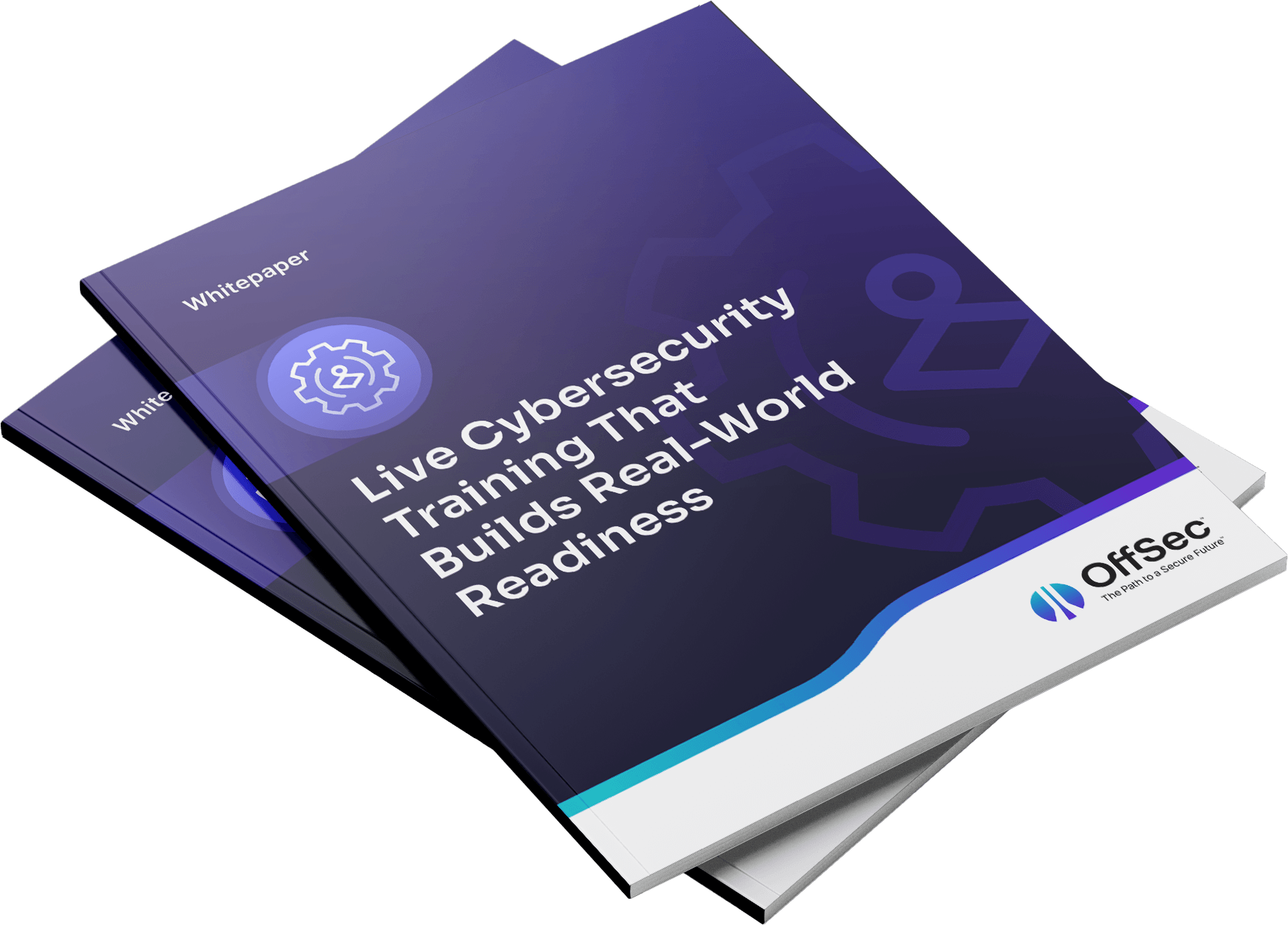
Executive Summary

This whitepaper examines the role of live, in-person cybersecurity training in building team readiness, and why it’s worth focusing on right now.
We dive into why individual skill development alone is not enough, why a shared training environment improves alignment and collaboration, and how instructor-led, hands-on practice can accelerate capability across the team.
About This Whitepaper

Cybersecurity teams can’t build true readiness through isolated learning alone.
When practitioners train together in person, they align faster, surface gaps sooner, and build the shared confidence needed to perform under pressure.
This whitepaper explores why live and onsite cybersecurity training matters, where it fits alongside self-paced learning, and how it helps teams turn individual skills into coordinated execution.
Download the whitepaper now
How in-person training turns skill development into team capability
Bring your team into the same room
Explore how shared training environments help teams build common expectations, strengthen communication, and practice working through complex scenarios together.
Use instructor guidance to accelerate learning
Understand how real-time coaching helps clarify confusion, challenge weak assumptions, and keep the team progressing as a group, rather than at the individual level.
Connect the training to operational readiness
Learn how live training can reveal strengths, expose execution gaps, and give leaders a clearer view of how prepared their teams are for real-world work.

We bring the training to you.
Instructor-led Live Training with OffSec experts, mapped to the cert track your security team is working toward.