
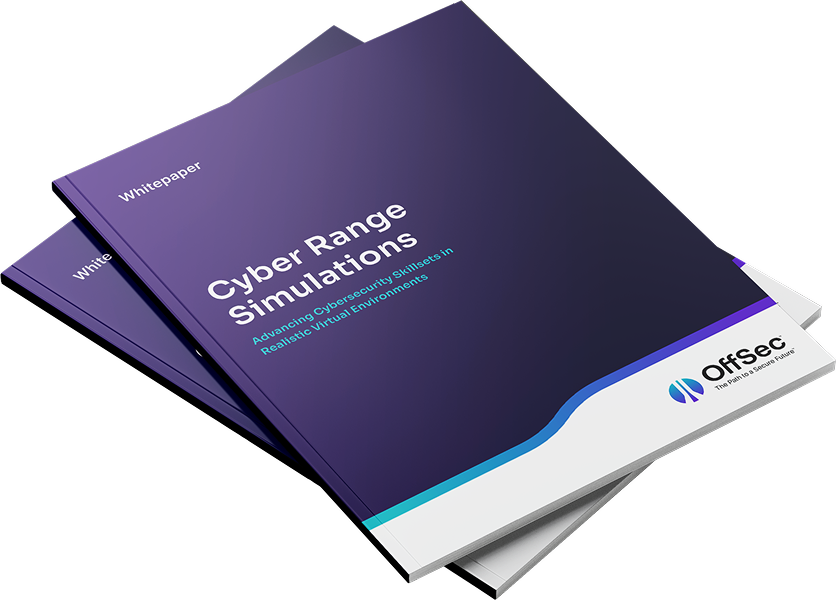
Executive Summary

This whitepaper explores how cyber range simulations help organizations strengthen their security posture through practical, hands-on training.
It covers how teams can use cyber ranges to identify skill gaps, test security controls, simulate real-world attack scenarios, and continuously improve incident response readiness across individuals, teams, and the broader organization.
About This Whitepaper

Most cybersecurity teams don’t fail because they lack knowledge. They fail because they haven’t practiced under real conditions.
When an attack happens, there’s no time to slow down, test ideas, or figure things out as you go. Teams need to respond with confidence, speed, and coordination.
Cyber ranges create that environment before it matters, giving teams a way to train, test, and improve in conditions that reflect real-world attacks.
Download the whitepaper now
Build teams that are prepared to respond under pressure
Train in conditions that reflect real-world attacks
Give teams the opportunity to practice realistic scenarios where they can test decisions, make mistakes, and improve without real-world consequences
Validate skills, tools, and security controls
Use simulated environments to assess whether teams and technologies perform as expected before they are relied on in production
Create a continuous cycle of improvement
Move beyond one-time training and establish ongoing exercises that strengthen readiness, coordination, and response over time

Enterprise Cyber Range
Practice real-world attack scenarios and build cyber defense skills through hands-on simulations.